Taking Control of Your Medical Appointments Through Intentional Tracking
Walking into a doctor's office can feel overwhelming even under the best circumstances. You might have rehearsed what you wanted to say in the car, only to draw a blank when the provider asks if you have any questions. Or perhaps you left an appointment feeling satisfied, only to realize hours later that you forgot to mention a symptom that has been bothering you for weeks. This experience is remarkably common and speaks to a fundamental gap in how many people prepare for and document their healthcare interactions. A tool like the Editable Minimal Doctor Visits Log Vol.1 addresses this gap directly by offering a structured yet flexible way to capture what matters before, during, and after each medical visit.
Healthcare today involves more moving parts than ever before. Patients often see multiple specialists, manage chronic conditions, track medications, and coordinate care across different facilities. Without a reliable system for recording these interactions, important details can slip through the cracks. The consequence is not just personal frustration but potentially compromised care when information fails to transfer accurately between appointments or providers.
Why Recording Doctor Visit Details Changes Everything
The human memory is fallible, especially under stress. Medical appointments inherently carry emotional weight whether the visit is routine or addresses a serious concern. When anxiety rises, cognitive bandwidth narrows, making it harder to absorb new information or recall prepared questions. Having a dedicated log removes the burden of pure memorization and allows you to stay present during the conversation with your provider.
Consider the timeline of a typical healthcare experience. Days or weeks before an appointment, you notice symptoms, think of questions, and intend to bring them up. During the appointment itself, you receive explanations, instructions, and possibly new prescriptions. Afterward, you need to act on recommendations, schedule follow-ups, and possibly share updates with family members or other doctors. Each phase benefits from documentation, yet most people rely on scattered notes, memory, or nothing at all.
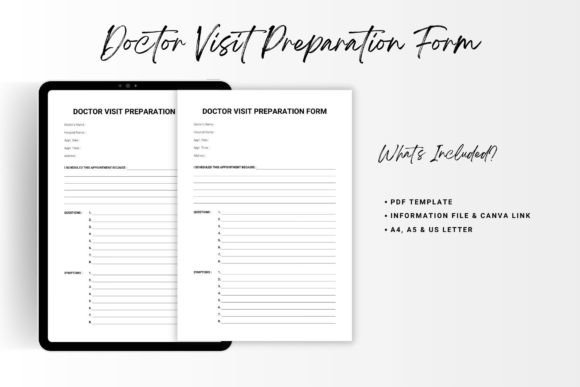
The Editable Minimal Doctor Visits Log Vol.1 is designed around this reality. It provides a single-page custom document that can be printed as needed or used digitally, giving you a consistent format to capture pre-appointment concerns and in-appointment notes. Because the file is editable in Canva, users can tailor text, colors, and objects to match their personal preferences or organizational style. This adaptability matters because no two people manage their health in exactly the same way.
Who Benefits Most from a Structured Visits Tracker
While anyone can benefit from better healthcare organization, certain groups find a tool like this especially valuable. Older adults managing multiple chronic conditions frequently see several specialists and need to track overlapping recommendations, medication adjustments, and lab results. A clear log prevents dangerous gaps or contradictions in care plans. Caregivers who accompany loved ones to appointments can use the tracker to document conversations and relay accurate information to other family members who could not attend.
Parents of young children face a different set of challenges. Pediatric visits often involve tracking developmental milestones, vaccination schedules, and temporary illnesses. Notes from one well-child check can inform the next, creating a longitudinal record that supports better conversations with pediatricians. Similarly, individuals navigating complex diagnostic journeys with unexplained symptoms benefit from documenting patterns over time, as this data can reveal trends that individual appointments might miss.
Even generally healthy people can use a tracker to stay organized during annual physicals, dental cleanings, vision exams, and other routine care. These visits may seem straightforward, but they still generate recommendations, screening results, and follow-up instructions worth recording. The habit of logging builds health literacy over time and creates a personal archive that grows in value as years pass.
Professionals and Business Owners
Busy professionals often postpone medical appointments because the disruption to work feels costly. When they do make time for a visit, they want the interaction to be as efficient and productive as possible. Having a prepared list of questions and a place to capture answers ensures the limited time with a provider is well spent. This group may prefer using the tracker digitally on a tablet or smartphone during the appointment, taking advantage of the editable format to type notes quickly.
Educators and Researchers
Those with academic or research-oriented mindsets appreciate the systematic approach a tracker provides. An Editable Minimal Doctor Visits Log Vol.1 can be adapted to include fields for specific metrics, study protocols, or observational notes relevant to personal health investigations. The minimalist design supports customization without overwhelming the core purpose of the document.
Hobbyists and Self-Trackers
A growing community of people tracks personal health data ranging from sleep quality and nutrition to heart rate variability and blood glucose. A doctor visits log complements these efforts by contextualizing quantitative data with qualitative notes from professional consultations. The combination of self-tracked metrics and provider insights creates a richer picture of overall wellbeing.
What Makes a Minimal Tracker Effective
Not all tracking systems deliver equal value. The most effective ones balance structure with flexibility, providing enough guidance to be immediately useful while allowing personal expression and adaptation. A tracker burdened by excessive fields or rigid categories may go unused, while one too sparse fails to prompt meaningful reflection. The minimal approach strikes this balance carefully.
Key characteristics of an effective visits log include portability, clarity, and ease of use. The document should be compact enough to carry in a bag or store digitally without hassle. Information hierarchy should guide the eye naturally from pre-appointment preparation to in-appointment documentation and post-appointment action items. The layout should feel intuitive rather than requiring instructions to navigate.
The Editable Minimal Doctor Visits Log Vol.1 embodies these principles through its single-page design. Available in A4, A5, and US Letter sizes, it adapts to different printing preferences and storage systems. The PDF format ensures consistent printing, while the included Canva link opens the door to deeper customization for those who want it. Images used in the preview demonstrate how the tracker looks in practice without overwhelming the user with unnecessary decorative elements.
Preparing for Appointments With Purpose
The most productive medical visits start before you enter the exam room. Taking time to articulate your concerns in writing serves multiple purposes. It clarifies your own thinking, helping you distinguish between minor observations and symptoms that truly warrant discussion. It also signals to your provider that you are engaged and prepared, which can positively influence the depth and quality of the conversation.
When writing down questions beforehand, consider both broad and specific inquiries. A broad question might address your overall health trajectory or concerns about family history. Specific questions could focus on a particular symptom's timing, triggers, or response to home remedies you have tried. Listing symptoms with details about onset, frequency, and severity gives your provider actionable information that supports accurate assessment.
Bringing a log also helps you advocate for yourself during appointments. If a provider seems rushed or dismissive, having a written list creates a gentle but persistent structure that keeps important topics on the agenda. You can reference your notes calmly and ensure each concern receives at least some attention before the visit concludes.
Taking Effective Notes During Medical Conversations
Active listening during an appointment is important, but so is capturing what you hear. Providers share a considerable amount of information in a compressed timeframe, including diagnoses, treatment options, medication instructions, and lifestyle recommendations. Attempting to remember all of this without writing anything down practically guarantees some loss of detail.
Effective note-taking in a clinical setting requires a light touch. You do not need to transcribe every word. Instead, focus on recording key terms, numbers, names of medications or tests, and any direct quotes that seem particularly important. If the provider uses medical terminology you do not understand, ask for clarification and note the plain-language explanation. This practice respects the provider's time while ensuring you leave with usable information.
Using a structured tracker keeps notes organized rather than scattered across random papers or apps. When you need to recall what one specialist said about a particular lab result or medication change, you can locate the relevant entry quickly. This efficiency becomes increasingly valuable as the number of visits accumulates over months and years.
Sharing Information Across Providers
Healthcare fragmentation remains a significant challenge. Primary care physicians, specialists, therapists, and allied health professionals each contribute pieces to the puzzle, but these pieces do not always connect. Electronic health records have improved information sharing in some settings, but gaps persist, especially when providers work in different healthcare systems that do not communicate with each other.
Your personal visit log serves as a bridge across these gaps. By maintaining your own records of what each provider said and recommended, you can share relevant information during subsequent appointments, regardless of whether the new provider has access to previous records. This practice is particularly valuable when seeing a new specialist, visiting an urgent care facility while traveling, or consulting with a provider for a second opinion.
The editable nature of the log means you can adapt the format to include fields for provider names, dates, locations, and other details that facilitate cross-provider communication. Over time, the log becomes a portable health history that supports continuity of care even as providers change.
Digital Files Versus Printed Pages
The debate between digital and paper tools often misses the point that each format serves different needs. A printed tracker offers tactile permanence and does not require battery power, screen space, or familiarity with software. It can be handed directly to a provider if you want them to see your question list or clarify a note. Paper also avoids the perception that you are distracted by your device during the appointment.
Digital use, on the other hand, offers searchability, backup, and the ability to edit and reorganize freely. The Canva integration with the Editable Minimal Doctor Visits Log Vol.1 means you can customize the design and then export it as a PDF for printing or keep a digital copy on your preferred device. You might choose to print copies for scheduled appointments while maintaining a digital archive of completed logs for long-term reference.
Many users find a hybrid approach works best. They prepare question lists digitally for legibility and ease of editing, print a copy for the appointment itself, and then scan or photograph the completed page afterward to store it alongside other health documents. This workflow combines the strengths of both formats without requiring a full commitment to either.
Establishing a Sustainable Tracking Habit
Any organizational tool only delivers value when used consistently. The simplicity of a one-page tracker supports habit formation by reducing the friction of getting started. There is no steep learning curve, no account to create, and no subscription to maintain. You download the file, make any desired edits, and begin using it immediately.
To build the habit, consider linking the use of your log to an existing routine. Before each appointment, set aside ten minutes to fill out the pre-visit section. After the appointment, take five minutes to review and complete your notes while the conversation remains fresh. Tuck completed logs into a folder or binder dedicated to health records, or store them digitally in a clearly labeled folder on your device.
Over time, the accumulated logs tell a story about your health journey. Patterns become visible. Questions that recur across visits may point to ongoing concerns that merit deeper investigation. The simple act of consistent documentation transforms scattered episodes of care into a coherent narrative that supports better decision-making and deeper understanding of your own wellbeing.
Customizing the Tracker to Fit Your Life
One size rarely fits all in personal organization. The Canva compatibility of this log means you can modify it to suit your specific needs without starting from scratch. You might add fields for medication tracking, allergy lists, insurance details, or specific health metrics you monitor regularly. You could adjust the color scheme to differentiate logs for different family members or types of appointments. The text, objects, and overall design remain fully editable, putting creative control in your hands.
This flexibility extends the usefulness of the tracker beyond what a static PDF could offer. A parent might create a pediatric version with growth chart references and immunization schedules. Someone managing a chronic condition could add symptom severity scales or trigger tracking sections. The minimalist foundation serves as a canvas for personalization rather than a rigid template.
The included A4, A5, and US Letter sizing options further support integration into existing organizational systems. A5 fits neatly into many personal planners and travel bags. US Letter suits standard American binders and folders. A4 aligns with international paper standards. This attention to practical sizing details reflects an understanding that a tracker must fit into real lives and real workflows to be genuinely useful.
Healthcare navigation does not have to feel chaotic or disempowering. Tools that support preparation, documentation, and information sharing put you back in the driver's seat of your own medical journey. A well-designed visits log does not replace professional medical advice, but it strengthens the partnership between you and your providers by ensuring that communication remains clear, complete, and continuous across time and settings.