Addition and Subtraction Volume-371: A Practical Look Inside This Ready-to-Use KDP Interior
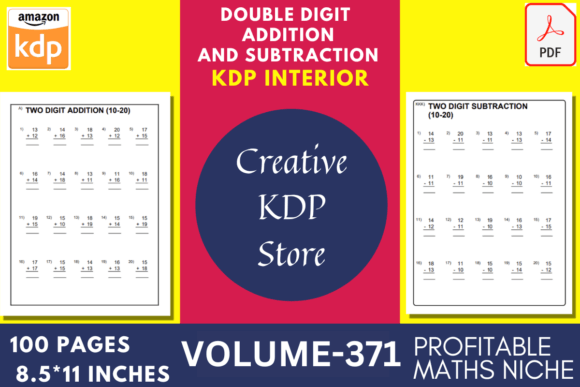
When you spend hours crafting educational materials or searching for a clean, dependable workbook to support a struggling student, the last thing you want is a file that half-delivers. Addition and Subtraction Volume-371 steps into that space as a 100‑page interior designed specifically for KDP publishers, teachers, and parents who need a crisp, no‑nonsense math drill resource. It comes as a ready‑to‑print PDF with 50 pages of addition and 50 pages of subtraction, all covering numbers 10 to 99.
But here’s what most people don’t talk about: a printable math interior like this isn’t automatically a plug‑and‑play success. There are small, avoidable missteps that turn a practical PDF into a headache—wrong paper expectations, overlooked file specs, or simply assuming it will teach instead of reinforce. Let’s walk through the realities that nobody spells out, so you can use Addition and Subtraction Volume-371 with clarity, not regret.
What Makes This Different From a Typical Store‑Bought Workbook
A quick scan of the product details reveals exactly what you’re getting: 8.5 by 11 inches, no bleed, high‑resolution pages, and separate answer keys. That might sound standard until you realize many workbooks you buy in bookstores mix operations on one page or skip answers entirely. Here, the division is deliberate. 50 clean pages of addition and 50 of subtraction let you isolate skills without the visual clutter that overwhelms a learner who’s trying to gain fluency.
The overlooked strength is the number range. Too many drill books stay in single digits or jump into triple digits with no bridge. By focusing on 10 through 99, Addition and Subtraction Volume-371 targets the sweet spot where renaming (carrying and borrowing) becomes routine. A parent helping a fourth grader patch gaps will find this far more relevant than a book stuffed with 2+3 problems. A tutor working with an adult learner will appreciate the dignity of a clean layout without childish characters.
The Mistake That Sabotages Your Print Results Immediately
Let’s be direct: if you hit “print” without checking your settings, you risk wasting paper, ink, and patience. The PDF is built with no bleed, meaning the content sits well inside the page boundaries. That’s a gift for home printers because you don’t lose edges. The mistake happens when someone selects “Fit to Page” while also having non‑letter‑sized paper loaded, or worse, they print double‑sided without verifying alignment. Because the interior is designed for KDP trim size 8.5x11 inches, any scaling can shrink the numbers just enough to make them frustrating for a child to read.
The better approach: open the PDF, go into your printer dialog, and select “Actual Size” or set scaling to 100%. If you plan to bind or hole‑punch the pages, leave a slightly wider margin by not printing borderless. This is especially important when you’re using the file to create multiple copies for a classroom or co‑op. Test print page 3 or 4 first, not page 1, because sometimes cover‑like first pages render differently. A single test sheet saves you from pulling 100 unusable pages out of the tray.
Assuming the Answer Key Means Instant Self‑Assessment
Yes, the PDF includes answers. That’s a huge plus compared to workbooks that force you to solve every problem yourself just to check for errors. But the trap is handing the entire answer section to a child or student without a system. When the answer pages are accessible at a glance, an impatient learner might flip back and forth not to verify, but to copy. This defeats fluency building.
What works instead: remove the answer pages from the printed stack and store them separately. If you’re using the digital version on a tablet for practice, screenshot only the problem pages and keep the answer sheets in a cloud folder with a different access time. For older students, you can turn answer checking into a constructive habit: they complete a page, self‑score with a red pen, and write one sentence about a mistake they repeated. This shifts the role of Addition and Subtraction Volume-371 from a passive filler to an active diagnostic tool.
Overlooking the Progressive Difficulty Within the Same Number Range
It’s easy to glance at “addition 10‑99” and think every page is equally challenging. In reality, well‑designed drill sheets often progress from tasks with no renaming to heavy renaming. If you shuffle the pages randomly, a student who struggles with regrouping might hit a wall on the first attempt and believe they’re failing. The smarter move is to flip through the PDF (before printing or uploading to KDP) and sequence pages from least to most complex. Look for patterns: problems like 23+45 are much gentler than 78+49.
With the subtraction half, notice whether the pages cluster around subtraction without borrowing before diving into borrowing across zeros. By grouping pages strategically, you can create a scaffolded progression that matches a learner’s pace. This also matters for KDP publishers who want to sell a workbook that feels pedagogically thoughtful rather than randomly assembled.
Buying It as a Physical Book and Not a Digital Interior
This catches first‑time KDP buyers off guard. Addition and Subtraction Volume-371 is not a paperback you receive in the mail. It’s a downloadable PDF interior. The description says “Ready to print PDF” and “Interiors with high resolution,” so if you wanted a finished book, you’d need to upload the file to KDP (or another print‑on‑demand service), pair it with a cover, and order an author copy. The frustration arises when someone downloads the file and immediately searches for a shipping confirmation.
Before you purchase, confirm you’re comfortable with PDF files and have a way to either print them at home or use them with a commercial printer. If your goal is to publish your own math workbook on Amazon KDP, this interior saves you layout time. But you’re responsible for checking KDP’s current guidelines for trim size, margins, and whether the provided PDF meets their transparency and flattening requirements. The “no bleed” spec helps a lot, though you should still open the file in Adobe Acrobat and run a pre‑flight check if possible.
Neglecting the Power of Spiral Review When Using Only One Operation at a Time
A clear division between addition and subtraction sheets is useful for focused practice. The downside? Learners can become so drilled on one operation that they momentarily forget how to switch gears. If you print the entire 50‑page addition block first and drill it daily for two weeks, then jump to subtraction, you might see a spike in errors when mixed practice is eventually needed. The brain gets comfy.
A practical fix: after every 10 addition pages, interleave 2 or 3 subtraction pages from the second half. You can physically rearrange the printed sheets or combine them in a binder with tabs. This small adjustment mirrors what cognitive scientists call interleaving, and it strengthens long‑term retention far more than blocked practice. The answers still stay separate, so you’re not compromising convenience.
Forgetting That the Interior’s Value Extends Beyond One Learner
Whether you’re a tutor, a homeschooling parent, or a KDP entrepreneur, you’ll get more from Addition and Subtraction Volume-371 if you treat it as a reusable asset. The 100‑page PDF can be printed multiple times for siblings, clients, or students. Some people mistakenly think they need to purchase a separate license for every classroom. Check the license terms included, but generally, KDP interiors bought for personal or classroom use allow repeated printing. Creators who want to publish the interior as a KDP book on their own account need the appropriate commercial rights; most downloads clarify this upfront.
If you’re a blogger creating freebies for your email list, don’t just slap this interior onto your site without verifying permissions. It’s licensed for KDP use, which usually doesn’t cover widespread redistribution as a free digital download. Respect the boundaries so you don’t accidentally violate copyright. The safest route: use it to create a physical book you sell on Amazon, or keep it for your own teaching inventory.
What to Check Before You Decide This Is the Right Fit
Not every math resource matches every situation, and that’s okay. Before you download Addition and Subtraction Volume-371, honestly assess:
- Skill level alignment: Numbers 10 to 99 assume the user can already read two‑digit numbers and has basic place value awareness. A child just starting first grade math might need more foundational work with manipulatives first.
- Printing capacity: Do you have a reliable monochrome or color printer? While the pages are likely black‑and‑white, high‑resolution files still demand decent toner. You don’t want blurry digits.
- End goal: Are you making a KDP book for sale, building a personal tutoring binder, or creating consumable worksheets for a co‑op? Each use affects how you’ll handle cutting, binding, or file preparation.
- Compatibility: The source is provided as a PDF. Ensure your device can open it without font substitution issues. Most modern systems handle it, but older e‑readers or low‑end tablets might choke on a 100‑page high‑resolution file.
Once you’ve answered these questions, the file becomes a flexible, straightforward tool. Many people overlook the fact that you can also extract individual pages to send as targeted digital homework. Just use your PDF reader’s print‑to‑PDF function to select pages 45 and 46 if you only want to assign subtraction with borrowing across zeroes.
Turning a Simple PDF Into Meaningful Math Practice
The real magic happens when you stop seeing Addition and Subtraction Volume-371 as just “problems on a page.” Pair it with a simple tracking sheet where the learner records time taken and accuracy for each drill. After five sessions, patterns emerge—maybe addition is fast but prone to carrying errors, while subtraction slows down dramatically when borrowing from zero is involved. Those insights let you customize verbal explanations or supplemental mini‑lessons.
Adults returning to math after years away also benefit from this interior. The uncluttered design removes the embarrassment factor that comes with brightly illustrated “kids’ workbooks.” A self‑directed learner can work through a page a day, self‑check with the answer key, and genuinely rebuild number sense without heavy theory.
In a marketplace flooded with busy, overdecorated workbooks, this volume’s straightforward structure is both its strength and the feature people most often misinterpret as “too simple.” The difference is in the execution: when you use it with intention, correct the small printing and sequencing mistakes early, and respect the licensing, you end up with a reliable, repeatable addition and subtraction resource that serves for years.