A Hands-On Look at Addition and Subtraction Volume-374
When you spend enough time creating or sourcing educational content, you start to recognize the difference between materials that merely exist and those that actually solve a workflow problem. Addition and Subtraction Volume-374 belongs in the conversation not because it promises to change the world, but because it takes a specific, often tedious task — formatting hundreds of clean, ready-to-use math exercise pages — and delivers it without fuss. For anyone publishing math workbooks on Amazon KDP, selling educational printables, tutoring, or running a small learning center, that kind of utility matters far more than flash.
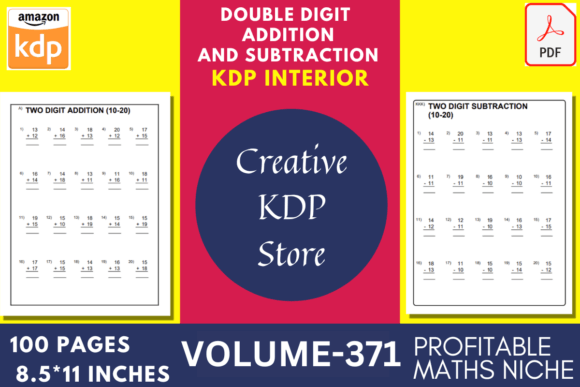
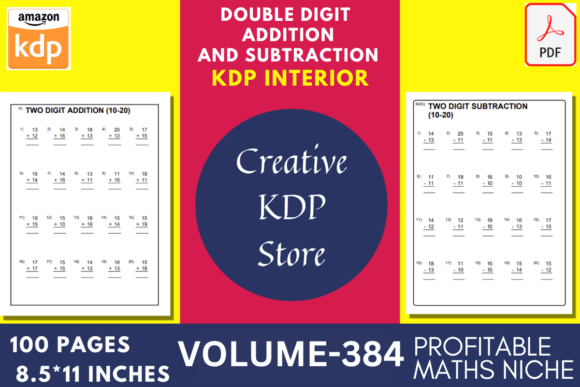
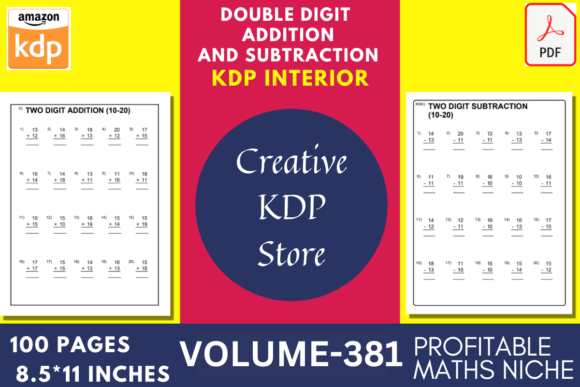
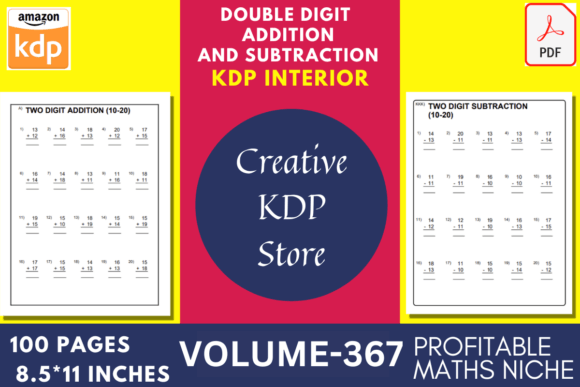
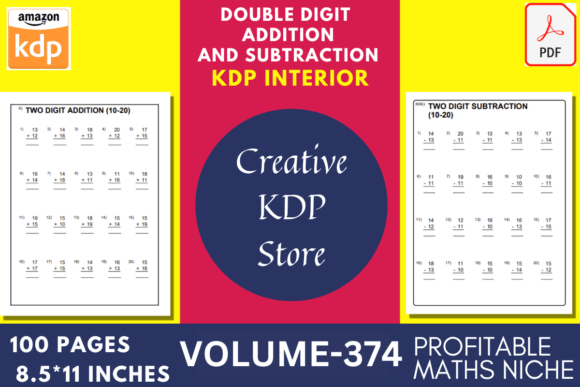
The package centers on a 100-page PDF interior built for straightforward reproduction. Half the content, 50 pages, concentrates on addition within the range 10–99. The remaining 50 pages cover subtraction in the same numeric band. Answers are included. There is no bleed to wrangle, the pages sit at a standard 8.5 by 11 inches, and the source document is a high-resolution PDF ready for immediate upload or printing. These details might sound mechanical, but they define how the interior functions day to day. If the layout had been different — a quirky trim size, missing answer keys, or a bleed requirement — the practical value would drop sharply for many users. Here, the choices feel deliberate and fit a common publishing mold.
What Sits Inside the File
Understanding what you actually get helps separate this product from the vague listings that clutter marketplaces. The core is a single PDF file containing 100 workable pages of math exercises. The addition section covers two-digit addition, from single-digit through numbers up to 99, without straying into three-digit territory. The subtraction section mirrors that structure. Both sections include answer keys at the back, which eliminates the need to solve problems manually or generate a separate answer sheet.
Each exercise page is designed with repetition in mind — not the mind-numbing kind, but the kind that builds fluency. The problems are arranged cleanly, and there is enough white space for a student to write without the page feeling cramped. Because the file is a high-resolution PDF, the numbers and lines are sharp, which matters when you are printing dozens of copies or displaying on a screen for digital use. The absence of bleed means you do not have to adjust margins or worry about content being trimmed during printing, a detail that saves a surprising amount of time if you have ever fought with a print-on-demand upload.
The Practical Logic Behind a 10–99 Range
Some might glance at the 10–99 boundary and wonder why it stops there. From a learning design standpoint, the range makes sense. Two-digit addition and subtraction are foundational for so much of elementary math — regrouping, place value, mental arithmetic — and yet finding a resource that stays confined to this sweet spot, without dipping into overly simple single-digit exercises or jumping too soon into the hundreds, is less common than you might think. Addition and Subtraction Volume-374 respects that gap and fills it completely. For a child who has already mastered basic facts below 10 but still needs consistent practice with numbers up to 99, this is the right level of challenge. It avoids boredom on one end and frustration on the other.
For the publisher or educator, this consistency is also a selling point you can communicate clearly. You know exactly what the learner will encounter, and you can describe the interior with precision: “50 addition pages, 50 subtraction pages, all problems within 10 to 99, answers included.” That kind of clarity often translates into better customer trust and fewer returns or complaints down the line.
Usability Inside Real Workflows
A product’s real test is how it behaves when you drop it into your existing process. With this interior, the path from download to publication is remarkably short. You open the PDF, confirm the contents, and if you are using KDP, you can upload it directly as a paperback interior or repurpose the pages for a printable listing. Because the file has no bleed, you do not need to calculate additional trim or worry about safe zones. The 8.5 by 11-inch size is accepted universally by most print-on-demand platforms without special setup.
For those who want to break the file apart, the PDF format allows you to extract individual pages or sections. You might take the addition half only, combine it with other interiors, or create smaller booklets. The high resolution holds up under any standard printing method, from home inkjet to commercial laser printing. There is no weird font embedding issue, no missing outlines, and no low-resolution blur at the corners. In short, it is built to be used, not just admired as a digital asset.
Answer keys deserve a specific mention because their absence often derails an otherwise decent product. Here, answers sit at the end of the file, separate from the exercise pages, which gives you the choice to include or exclude them in your final published version. If you are printing for a classroom, you can keep the answer pages as a teacher reference. If you are publishing a workbook, you can slice them out entirely or leave them in for self-assessment. That small flexibility adds operational value.
Who Finds This Kind of Asset Immediately Useful
The audience for Addition and Subtraction Volume-374 is broader than it might first appear. Obviously, KDP publishers looking for no-content or low-content math book interiors fall into the primary group. They can take the file, add a cover, and have a product ready in under an hour. Tutors and homeschool parents represent another clear segment — they often need bulk practice sheets that do not require hours of preparation, and a 100-page PDF with answers serves exactly that daily drill requirement.
Beyond that, freelance graphic designers and content creators who build educational printables for Etsy or Teachers Pay Teachers can layer their own branding, add instructions, or bundle these pages with other materials. The interior acts as a time-saving backbone. Small business owners who run after-school programs or summer math camps may also find it valuable as a cost-effective, reproducible activity source. The common thread is a need for reliable, print-ready math practice that does not demand cleaning up formatting or double-checking answer accuracy.
What the Design and Layout Get Right
Layout in an educational interior is not just about looks; it directly affects usability. A crowded page can overwhelm a child. An unevenly spaced page can confuse. The design inside Addition and Subtraction Volume-374 is noticeably tidy. Exercises are placed with room to work, numbers are sized appropriately for young learners, and the overall visual rhythm is calm. There is no decorative clutter — just the math. This plainness might feel underwhelming to someone expecting a heavily illustrated workbook, but for many practical contexts, plain is professional and adaptable.
Because no bleed is used, the pages do not have color going to the edge, and that contributes to a clean, reproducible look. You can print single-sided for classroom use or double-sided for a workbook without ghosting or alignment issues. High resolution ensures that even photocopies retain legibility, which is a real concern in settings where originals get scanned or reprinted multiple times.
Strengths You Can Rely On
When you strip away the packaging, the strengths of this interior distill into a few concrete points. First, consistency: every page follows the same structural logic, so learners and educators know what to expect. Second, completeness: answers are provided, eliminating a common pain point. Third, printability: the 8.5x11 no-bleed format works with virtually any printer or publishing platform without modification. Fourth, focus: sticking to addition and subtraction within 10–99 means the content is not trying to cover too wide a range, which sharpens its purpose.
Long-term, these strengths translate into a resource you can return to repeatedly without it becoming obsolete. New batches of students, new print runs, new book listings can all be generated from the same file. For a publisher, that multiplies the original investment over time. For an educator, it becomes a staple that does not need retesting or re-proofing every year.
Limitations Worth Acknowledging
No single interior fits every need, and being honest about where Addition and Subtraction Volume-374 might fall short helps you make an informed decision. The most obvious limitation is the narrow numeric range. If you need three-digit addition or mixed operations including multiplication and division, you will need separate resources. The interior also does not include word problems, math games, or visual puzzles — it is strictly a collection of straight arithmetic exercises. That simplicity is a strength for certain uses but a drawback for others who want a more dynamic workbook.
Additionally, the file is a static PDF. You cannot edit the problems directly without specialized software, and there is no interactive digital version included. If your audience primarily uses tablets and expects fillable fields, you would have to add that functionality yourself. The lack of bleed, while convenient for most, does mean you cannot design a full-bleed cover or edge-to-edge interior pages without reformatting, though that is unlikely to be a concern for a bare math exercise book.
Finally, because the interior is sold as a ready-made asset, you share the same core design with other buyers. That is standard in the PLR (private label rights) and KDP interior space, but it is worth noting if you plan to build a highly distinctive brand that requires completely unique page layouts. Most users pair these interiors with custom covers anyway, which mitigates the issue.
Real-World Observations Over Repeated Use
After working with similar interiors over several publishing cycles, a few patterns emerge. The cleanliness of the PDF matters enormously. Files that come with embedded layers, strange fonts, or color profiles from old software create upload errors and print rejections. This one behaves benignly. Uploads go through smoothly on KDP with standard black-and-white interior settings, and the paperback proofs I have seen come back with crisp, dark text and no cutoff. For classroom photocopies, the pages hold up well even at reduced sizes, which is a small but meaningful detail if you ever need to create half-page booklets for group work.
One practical recommendation: if you are publishing through KDP, add a few blank or ruled pages at the end for notes. The PDF does not include extra pages beyond the answers, so appending a couple of lined sheets yourself can make the finished book feel more complete. Also, check how the answer pages align with your trim — sometimes printers shift content slightly, though the no-bleed setup reduces that risk considerably.
Weighing the Long-Term Value
The worth of a resource like this hinges less on initial appeal and more on repeat use. A 100-page interior might seem small compared to a 300-page mega workbook, but the focused range means you are not paying for filler. For a KDP publisher, you can launch one or several books from the same file — separate addition and subtraction volumes, a combined workbook, a large-print version — simply by reorganizing or reformatting slightly. That multiplier effect is something experienced publishers recognize immediately.
For a tutoring practice or a small educational business, the PDF can be printed on demand for years without a subscription fee or recurring cost. The asset sits on your drive until you need it, and the answer keys remain accurate indefinitely. There is a quiet reliability in that which appeals to professionals who hate wasting time on unvetted materials.
If your current project calls for a no-frills, properly formatted set of two-digit addition and subtraction exercises, this interior delivers what it promises. It will not solve every math resource challenge you have, but it will cover a specific, frequently encountered gap with a level of polish that reduces friction in both publishing and teaching pipelines. Before you commit, check whether the 10–99 range matches the grade level or skill you are targeting, and consider how you might adapt the file for your personal brand. When those checkboxes get ticked, the decision often becomes straightforward.