A Practical Look at The Fun and Easy Memory Activity Book for KDP and Beyond
Building a low-content publishing business demands more than a simple idea — it requires repeatable systems, print-ready assets, and designs that consistently engage end users. The Fun and Easy Memory Activity Book positions itself as a turnkey solution for entrepreneurs, creators, and small publishers who want to skip months of design work and jump straight to selling. This collection, delivered as a fully formatted KDP interior, bundles 100 distinct activity pages across more than twenty puzzle types, all tested and ready for upload. After examining the file set, organizational structure, and real-world usability, several practical observations emerge that matter for anyone considering this kind of resource.
What Exactly Is the Product
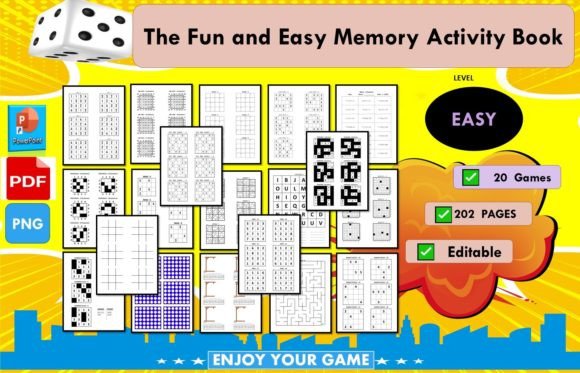
The offering is a downloadable digital package containing the interior pages for a complete activity book. It arrives as a mix of PDF, editable PPT, and PNG files, with the core deliverable being a 202-page PDF that meets Amazon KDP specifications. The book dimensions are set at 8.5 x 11 inches with no bleed, a direct fit for standard trim sizes. Crucially, this is an interior-only product — cover design remains the buyer's responsibility. The immediate takeaway is that it is structured for speed: you licence the content, finalise your cover, and proceed to uploading.
Inside, you will find exactly 100 puzzle pages, each one with a corresponding solution page included within the document. That pairing solves a common friction point for activity book publishers who otherwise would need to create answer keys manually. The types of puzzles span logic, word, number, and visual challenges, from familiar formats like Sudoku and Mazes to less common inclusions such as Nurikabe, Kakurasu, and Hitori. This range is deliberate, aiming to hold the attention of adults — the primary audience for many memory and brain-training publications today.
Primed for the Low-Content Business Workflow
One of the first aspects you evaluate with any KDP interior is the file's upload readiness. Most seller feedback on similar resources mentions encountering margin errors, missing fonts, or resolution problems. This product explicitly promises high-resolution, print-ready interiors, and the file set appears aligned with that promise. The PDF has been formatted and tested for KDP, meaning it bypasses the trial-and-error phase that can cost hours or lead to rejection notices.
The inclusion of editable PPT files adds a useful layer of flexibility. You might want to rebrand the book with your own puzzle titles, adjust headers, or insert subtle branding. Without an editable source, that customisation either requires expensive software or remains impossible. Having the PowerPoint version lets you make quick text changes, replace a puzzle or two if desired, and still export to PDF for upload. The PNG files offer further utility for creating book previews, social media graphics, or marketing materials without extracting pages from the master PDF.
For those operating multiple pen names or building a portfolio under one KDP account, this flexibility becomes a real time multiplier. You can release one version targeting "Logic Puzzles for Professionals," modify the layout slightly for a "Travel Edition" series, and tailor the interior to different audience segments, all from the same base asset.
Puzzle Variety and What It Achieves
Memory activity books often lean too heavily on one or two puzzle styles, which limits shelf appeal and makes the content feel repetitive. Here, the spread is intentionally broad. The listing catalogues more than twenty specific formats:
- Word-based puzzles: Hangman, Word Puzzles, ABC Path
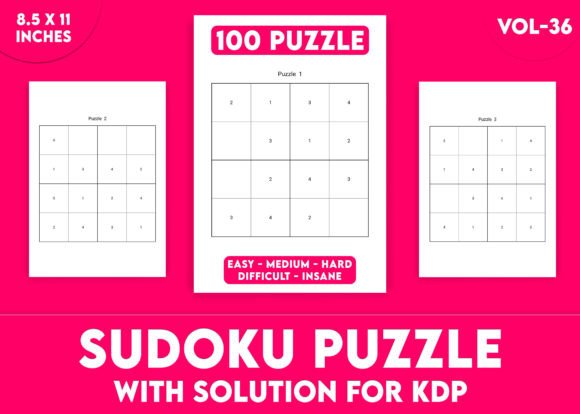
- Number and logic puzzles: Sudoku, Number Place, Calcudoku, Kakurasu, Shikaku, Range Puzzles, Hitori
- Visual and spatial challenges: Mazes, Warship Puzzles, Mine Finder (Minesweeper style), Nurikabe, Skyscraper
- Abstract and strategy games: Four in a Row, Tic Tac Toe Logic, Tic Tac Toe Grids, Math Equation
This mixture serves two distinct purposes. First, it reduces puzzle fatigue. A customer working through the book can shift between number-based deduction and word guessing, keeping the mental engagement high without monotony. Second, it broadens the marketability of the published book. Keywords like "mixed puzzle book for adults," "variety brain games," and "100 activity puzzles" become genuinely accurate descriptions rather than stretched claims.
The memory-boosting angle is reinforced through puzzles that demand working memory, pattern recognition, and logical sequencing. For instance, Skyscraper puzzles ask solvers to visualise building heights in a grid; Nurikabe involves shading cells according to numeric clues, exercising spatial reasoning. While no single book can claim to transform cognitive ability, having a curated collection that encourages different mental strategies adds perceived value for buyers who seek mental stimulation or screen-free relaxation.
Consistency, Presentation, and Real-World Usability
From a production standpoint, interior consistency is non-negotiable. You want all 202 pages — puzzles and solutions alike — to carry the same visual weight, margins, and typography so the printed book feels professionally designed. Based on the specifications, the layout adheres to an 8.5x11 inch format with uniform styling. Solutions are provided directly after each puzzle or in a dedicated section; the structure matters less than the fact that they exist and are easy to find. The absence of bleed simplifies printing for both KDP and other print-on-demand services, reducing one more variable that can cause errors.
Quality can occasionally slip in large puzzle compilations. Repeating grids or misaligned cells show up quickly when readers work on them. Reputable sellers in this space emphasise testing. This particular product mentions that all pages have been tested for KDP. In practice, that means the submitter has run an interior through Amazon’s automated checker and manual review process, which flags non-compliant fonts, low-resolution images, and spacing issues. Having that vetting done upfront lowers the risk significantly.
On the usability side, the editable PPT becomes valuable if you spot a typo uncommon in puzzle books — for example, a direction instruction that reads awkwardly. You can correct it and regenerate the PDF in minutes. The high-resolution PNG files also let you create supplementary products like individual printable sheets sold on Etsy or used as lead magnets if you run a blog or social channel. This adaptability means the asset does more than populate one KDP listing; it can support a micro-brand across multiple platforms.
Who Gains the Most from This Resource
Not every creator needs an all-in-one puzzle interior. But a specific group will find the math and time saving clearly favourable.
Entrepreneurs starting a low-content publishing brand. Designing even 20 puzzle pages from scratch, testing them, formatting them, and ensuring solutions match — that’s a substantial workload. Starting with 100 tested pages unblocks the process. You can publish within days, learn the market, and reinvest revenue into commissioning unique content later.
Established KDP sellers diversifying their catalogue. If you already sell journals, planners, or colouring books, adding an activity book broadens your product line with minimal effort. The interior can be the cornerstone of a bundle or seasonal release.
Educators and workshop facilitators. Trainers who run memory clinics, senior centres, or cognitive wellness programmes often need reproducible worksheets. Having the PDF and PNG files means you can print selected pages legally for participants, assuming the licence permits such use. Always check the seller's terms, but many low-content asset creators allow printed copies for personal or small-group use as long as you do not resell the digital files.
Freelancers and marketers offering content upgrades. A marketer might extract a dozen puzzles to create a downloadable "Brain Break Kit" for email subscribers. Because the PNGs are ready, assembling a quick PDF giveaway takes very little time. This extends the utility beyond publishing into audience building.
Realistic Observations and Where Caution Applies
Any product evaluation should note boundaries. This interior is not a magic bullet for passive income. Selling on KDP still requires keyword research, cover design, competitive pricing, and ongoing optimisation. The interior solves the content creation bottleneck, but it does not market itself.
Puzzle books occupy a moderately competitive niche. A generic presentation might struggle to stand out if you do not add your own branding touches — a custom copyright page, an introduction that feels unique, or a themed cover. The editable PPT helps, but the core puzzle layouts remain fixed across all buyers who license the same pack. Differentiation will come from your cover design, title, subtitle, and how you position the book in your listing copy.
For audiences that expect extreme polish, such as premium gift books, you may also want to audit the interior visual style first. The specification mentions high-resolution interiors; but aesthetic taste varies. The previews (not provided here) should give a sense of the line art, puzzle grid clarity, and font choices. When in doubt, download the available sample pages before committing fully, or contact the seller for clarification.
Additionally, while the package includes 100 puzzles, memory activity books sometimes thrive on incremental difficulty. A flat difficulty curve across all pages might disappoint readers who seek progression from easy to challenging. If that matters for your brand, you could reorder pages in the PPT to create a sense of increasing difficulty, even if the puzzles themselves remain the same.
Practical Tips for Making the Most of This Interior
If you decide to use The Fun and Easy Memory Activity Book, a few implementation steps will strengthen the final published result:
- Design a cover that signals the book's purpose unmistakably. Since the interior is neutral, your cover must convey whether the book targets seniors keeping their minds active, professionals on a flight, or puzzle enthusiasts seeking variety.
- Spend time on the Amazon listing's description and keywords. Draw from the actual puzzle list — mention Sudoku, Mazes, Word Puzzles, Calcudoku, Nurikabe, and others. This captures long-tail search interest and sets honest expectations.
- Consider adding a brief "How to Solve" page for less common puzzles. Not everyone knows Hitori or Shikaku rules. A concise instructions page can reduce frustration and reduce returns. The editable PPT makes inserting such a page straightforward.
- Check the solution placement. If the PDF contains solutions immediately after each puzzle, some users may accidentally glimpse answers. Some publishers prefer placing all solutions at the back. You can rearrange pages via PPT if that suits your audience better.
- Order a proof copy. Even with a tested file, printing one physical proof prior to publication confirms that the greyscale contrast translates well to paper and that puzzle grids are crisp at 8.5x11.
Long-Term Potential Within a Low-Content Portfolio
Sustainable publishing often hinges on repurposing and reuse. Because the asset arrives in multiple file formats, you can adapt it beyond a single paperback. Create a spiral-bound version for other POD platforms, offer individual puzzle sheets as digital downloads, or compile a series with slightly altered selections. Over time, the interior's true cost becomes negligible relative to the number of products it underpins.
Importantly, activity books have a longer shelf life than many trend-driven low-content books. Brain games and memory activities are perennially searched topics on Amazon, with steady demand from older adults, commuters, and anyone looking to reduce screen time. While you must remain attentive to market saturation, having a well-organised, problem-free interior in your toolkit gives you a persistent publishing advantage.
Deciding Whether This Asset Matches Your Project
The decision to acquire a ready-made interior like The Fun and Easy Memory Activity Book comes down to how you value your production time versus customisation. If you are testing the waters of KDP publishing, this kind of resource reduces the barriers significantly. You get an instant product skeleton that has been battle-tested for upload compliance. If you are an experienced publisher needing to fill a catalogue gap quickly, the file flexibility and puzzle diversity offer a solid foundation that can be adapted with minimal friction.
Think of it as a professional template rather than a finished book. Your cover, your description, and your market positioning do the heavy lifting of conversion, while the interior delivers a quality, error-free experience to the person who buys the final printed copy. The combination of 100 hand-picked puzzles, provided solutions, and multi-format editability makes this an asset that aligns with the practical realities of selling low-content books in a competitive marketplace.