Expense Tracker Journal KDP Interior: Smart Applications
Financial clarity rarely arrives by accident. It grows from small, consistent habits—and that’s exactly where a well-designed tracking tool transforms good intentions into lasting routines. The Expense Tracker Journal KDP Interior brings that tool directly to creators, publishers, entrepreneurs, and anyone ready to take charge of their money story. This isn’t just a set of numbers on a page. It’s a practical framework for awareness, decision-making, and creative financial design.
What This Interior Offers Creators and Users
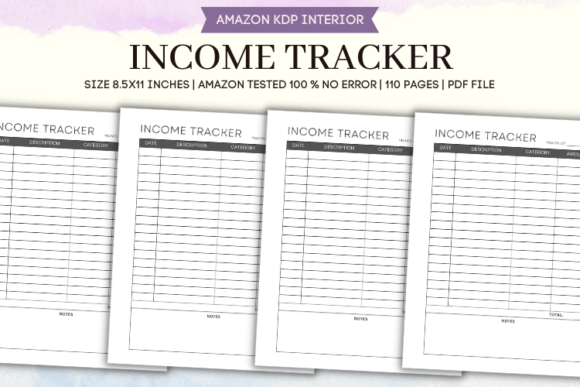
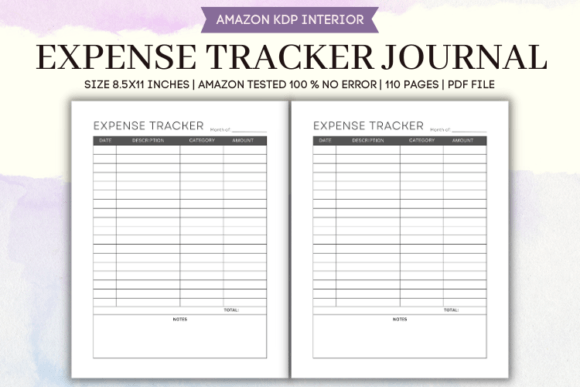
At its core, the product is a ready-to-upload PDF file built specifically for Amazon KDP or professional printing. With 110 pages in a generous 8.5 × 11-inch format and no bleed, the layout sits comfortably on standard paper without trimming guesswork. Every page was tested thoroughly to guarantee a 100% error-free experience. For KDP sellers, that means fewer returns and higher customer satisfaction. For personal users, it means a clean, distraction-free canvas for daily entries.
The interior is structured but not restrictive. Lines, columns, and date fields guide the eye without overwhelming the user. Month-over-month comparisons become effortless. Year-end summaries feel natural. Because the file arrives print-ready, you can upload it directly to Amazon KDP, send it to a local print shop, or even use it at home with a standard printer. The high-resolution output ensures crisp text and sharp lines regardless of the paper weight you choose.
Creative Ways to Use the Expense Tracker Journal
A simple expense log can do far more than record coffee purchases. When approached with intention, the same page layout transforms into a strategic tool across multiple scenarios. The beauty lies in how users adapt the structure to their unique goals.
- Daily personal expense diary – capture every transaction to identify spending leaks
- Small business income and outflow ledger – separate revenue streams and operational costs
- Project budget tracker – monitor spending against estimates for client work or internal initiatives
- Savings goal companion – log progress toward a down payment, vacation fund, or emergency cushion
- Tax deduction organizer – categorize deductible expenses throughout the year to simplify filing
- Travel budget journal – plan and track daily spending on trips without post-vacation regret
- Meal planning cost control – correlate grocery bills with weekly menus to cut food waste
- Event budget workbook – manage weddings, parties, or conferences without runaway costs
For Freelancers and Gig Workers
Irregular income demands sharper tracking. A freelance graphic designer, for instance, might receive payments at unpredictable intervals while juggling software subscriptions, hardware upgrades, marketing costs, and client lunches. Using the Expense Tracker Journal KDP Interior, they can log each incoming payment alongside corresponding business expenses. Over time, patterns emerge: which months run lean, which projects bring the highest margin, where small costs accumulate unnoticed. This data shapes better pricing decisions and more accurate tax estimates.
For Small Business Owners
A coffee shop owner faces daily inventory purchases, variable utility bills, staffing costs, and equipment maintenance. One page per day in the journal becomes a snapshot of operational health. They might segment categories like supplies, labor, marketing, and miscellaneous, then tally weekly subtotals. The large 8.5 × 11-inch layout provides ample room for handwritten notes—a sudden price hike from a supplier, a seasonal trend worth remembering. These marginal comments turn a ledger into a strategic planning tool.
For Households and Couples
Money conversations benefit from objectivity. A couple tracking shared expenses can use the journal as neutral ground. They might record groceries, utilities, rent or mortgage, childcare, and entertainment in clearly labeled columns. A section for “savings transferred” reinforces joint goals. When the numbers sit plainly on paper, discussions shift from blame to collaboration. The journal also serves as a historical record; referring back to a high-spending month can prompt practical adjustments without emotional friction.
Customizing the Journal for Different Audiences
While the interior is ready to use as-is, many creators treat it as a foundation. The clean, consistent structure allows for impressive adaptability without breaking the core usability.
For KDP Publishers and Designers
Publishers can wrap the interior with a niche-specific cover—think “Busy Mom’s Budget Book” or “Freelancer Income & Expense Tracker”—and tailor the description to match. A graphic designer might add a branded title page and a short introduction outlining suggested tracking methods. Since the file is error-free and tested, there’s no need to troubleshoot layout glitches. The focus stays on marketing and connecting with the right audience. Designers exploring seasonal themes might build a series: a fresh botanical version for spring, a minimal monochrome edition for professionals, a playful illustrated style for students.
For Bloggers and Content Creators
A finance blogger could offer the journal as a printable lead magnet, inserting a subtle logo and a call-to-action on a dedicated notes page. A productivity coach might bundle it with an online course about financial wellness. Because the interior maintains a straightforward grid, the added branding feels helpful rather than intrusive. Creators can also film a walkthrough video, sharing their personal setup and how they color-code categories—blending content marketing with genuine value.
For Educators and Financial Coaches
Teaching money management often requires tactile practice. An educator can distribute printed pages during a workshop, asking students to simulate a month of income and expenses. The large format leaves space for corrections and reflections. A financial coach might assign the journal between sessions, encouraging clients to bring completed pages for review. The tangible act of writing reinforces behavioral change far more than swiping through an app.
Designing Variations Without Losing Clarity
When adapting the interior, resist the urge to overcrowd. The existing structure already prioritizes clarity—date fields, descriptive lines, totals sections. If you add decorative elements, place them in margins or as subtle page accents. Use consistent column widths and clear fonts to preserve scannability. Remember: the goal is to make tracking feel effortless, not to create a visual puzzle. A user who opens the journal should immediately know where to write and what to record. The supplied file nails this balance, so any customizations should honor that quiet intelligence.
Practical Tips for Getting the Most Value
Owning a beautiful tracking journal is one thing; forming a lasting habit is another. Start small. Commit to recording every transaction for just one week—no editing, no judgment. Keep the journal in a visible spot, like a kitchen counter or desk, to trigger the daily entry. A set of colored pens can inject subtle joy: blue for income, red for fixed bills, green for discretionary spending. At the end of each month, spend fifteen minutes scanning for surprises. Often, the most illuminating patterns hide in plain sight: a streaming subscription that doubled without notice, a snack habit that added up to half a grocery bill.
If you’re using the journal for business, clip relevant receipts inside or staple small envelopes to pages for physical records. The “no bleed” design means ink won’t seep through, so you can write firmly without worrying about ghosted artwork on the reverse side. That detail is particularly valuable for archival purposes—the pages stay clean and legible for years.
Staying Organized and Consistent
Set a fixed time for entries. Many users prefer evenings, recounting the day’s spending while memory is fresh. Others thrive on a morning review of the previous day’s outflows. There’s no single rule, only the one that fits your rhythm. With 110 pages, the journal comfortably covers three to four months of daily use, or a full year if you dedicate one page per week. If you’re tackling a specific project, don’t be afraid to skip days that aren’t relevant—the journal works for you, not the other way around.
The SEO and Publishing Angle for KDP Sellers
For sellers, the Expense Tracker Journal KDP Interior shortens the product development cycle dramatically. Instead of building a book from scratch, testing layouts, and praying there’s no hidden formatting error, you receive a proven, market-ready asset. Keyword research pairs naturally with this interior because the concept taps into evergreen demand: people will always need to track money. Consider targeting subcategories like “accounting ledgers,” “personal budgeting,” “small business bookkeeping,” or “expense trackers for independent contractors.” A well-written listing that mentions expense tracker journal, daily spending log, financial organizer, and budget workbook can pull in steady traffic. The large size and high-quality build also allow for premium pricing compared to smaller, thinner alternatives.
Diversify by creating multiple variations—same interior, different covers, each aimed at a distinct demographic. A minimalist gray cover speaks to professionals; a colorful hand-drawn design attracts creative types; a soft pastel version appeals to planners and stationery lovers. This approach multiplies your shelf presence without multiplying your workload.
Balancing Creativity and Data Clarity
It’s tempting to treat a blank page as an artistic playground, but with financial tracking, clarity is king. Decorative headers should never overpower functional labels. If you add habit trackers, savings thermometers, or motivational quotes, place them in dedicated margins or separate note pages, not inside the core ledger area. The original interior already understands this separation, which is why it works so well as a foundation. When you open the file, the priorities are unmistakable: date, description, amount, category, balance. That hierarchy needs protection. A creative professional adding custom touches should ask: “Does this make the entry faster to read or more distracting?” If the answer leans toward distraction, pull back.
Real-World Scenarios and Use Cases
To move from theory to practice, imagine everyday people putting the journal to work:
The Travel Budget Edition
Before a two-week trip, a user dedicates ten pages to pre-travel planning—estimated costs for flights, accommodation, meals, activities, and a small buffer. Once on the road, they fill in actual spending each evening. Side-by-side comparison reveals which areas ran over and where they saved. By the trip’s end, the journal holds not just numbers but memories clipped to receipts, forming a mini travel memoir and a solid reference for future adventures.
The Home Office Makeover Tracker
A homeowner remodeling a workspace logs material costs, tool rentals, permits, and unexpected fixes. The journal’s date column time-stamps each purchase, and a notes section captures contractor conversations. When the project wraps, the final tally becomes a reference for insurance or resale value. Because the interior is large, they can staple paint swatches or fabric samples onto selected pages without covering the written records.
The Startup Operating Ledger
A pair of co-founders use one shared journal to track initial capital, prototype expenses, marketing experiments, and subscription tools. They review it during weekly check-ins. The physical presence of the journal in their shared workspace serves as a constant nudge toward financial transparency—no login required, no app updates, just open pages and honest numbers.
How to Keep the Tracking Habit Alive
Motivation ebbs and flows. On days when logging feels tedious, remember the bigger payoff: reduced anxiety, clearer goals, the ability to say yes or no to spending with confidence. Some users find that a simple reward system works—after a fully tracked month, treat yourself to something small using money saved through better awareness. Others share their progress with an accountability partner. The journal’s physical nature strengthens commitment because it can’t be swiped away; it sits on your desk as a quiet promise.
When you reach the final page, don’t stash it in a drawer. Archive it. A collection of filled journals builds a personal financial history that reveals growth, resilience, and shifting priorities. That data is richer than any spreadsheet because it carries the context of your own handwriting and the decisions you made at each turn. The Expense Tracker Journal KDP Interior seeds that archive with a professional, repeatable template you can return to year after year.